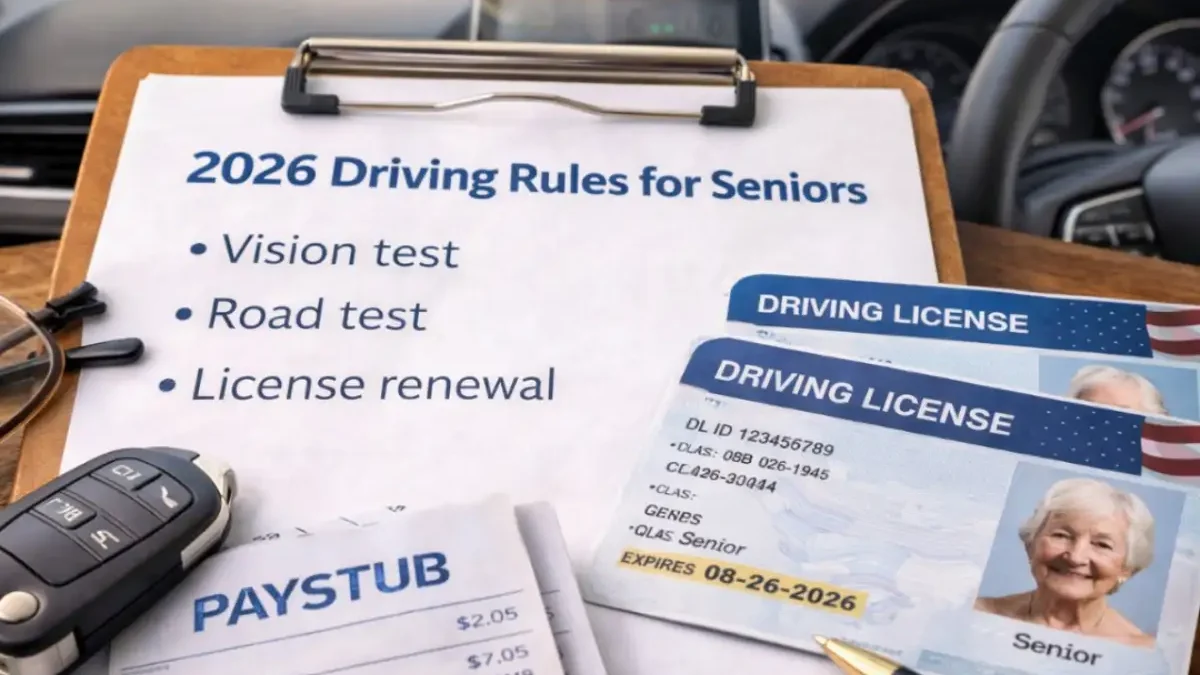
The onset of January 1, 2026, heralds a significant change for senior drivers across the United States. On this date, the U.S. Department of Transportation (DOT) will implement new regulations aimed at drivers aged 70 and above. This pivotal legislation seeks to bolster road safety, ensuring that millions of older drivers can maintain their independence while navigating the roads safely.


These regulations are designed not to hinder the freedom to drive but to prioritize the safety of both seniors and other road users. The new framework introduces measures such as regular vision checks, reaction-time screenings, and refresher driving courses, functioning more like preventive care for drivers rather than merely punitive regulations.
Table of Contents


- Why the New Law?
- Key Changes Under the New Framework
- Mixed Reactions from Seniors
- Restricted Licenses: A Middle Ground
- Impact on Transportation Alternatives
- What’s Next?
- Is this law mandatory in all states?
- Can seniors take their vision test via telehealth?
- What happens if a senior fails the tests?
- How does this law affect seniors’ independence?
- Are there any transportation alternatives for seniors who can’t drive?
Why the New Law?
The increasing population of seniors in America cannot be overlooked. Currently, nearly 48 million Americans aged 65 and older possess valid driver’s licenses, and this number is projected to climb. Federal officials have long warned that while many older drivers remain capable, age-related changes such as slower reflexes and reduced night vision can heighten driving risks. The purpose of this law is to confront these risks while ensuring seniors retain their driving privileges.
As a representative from the DOT articulated, “We’re not punishing age—we’re rewarding ability.” This sentiment underscores the intent to balance safety and independence.
Key Changes Under the New Framework
The new driving regulations aim to find a middle ground between reducing accident risks and preserving the independence of senior drivers. Let’s delve into the notable changes:
1. Regular Vision and Reaction Time Checks
Seniors will now be required to undergo periodic vision screenings and reaction-time assessments aimed at detecting any impairments that may pose safety risks before they become critical issues.
2. Refresher Driving Courses
In some states, seniors will be mandated to complete refresher driving courses. These courses are crafted not only to revisit current driving laws but also to enhance skills and adapt to the changing dynamics of road usage.
3. Doctor and Family Reporting
An intriguing aspect of the new regulations is a reporting mechanism that allows family members and healthcare providers to report any driver they deem unsafe. This could lead to a medical evaluation or driving test. While some critics have expressed concerns regarding privacy, many reports originate from health professionals observing significant declines in a person’s ability to drive safely.
4. State-Specific Implementation
Because driver’s licenses are managed at the state level, the implementation of these regulations will vary by state. Certain states may permit telehealth vision screenings, whereas others require in-person evaluations. For example, New York is deploying mobile DMV vans to offer screenings at senior centers, aiming to reduce travel difficulties for this demographic.
Mixed Reactions from Seniors
The introduction of these new protocols has elicited a spectrum of responses among seniors. While some express apprehension, others find the changes empowering.
Mary Thompson, an 82-year-old resident of Ohio, shared her feelings after passing her initial reaction-time test: “I thought it was going to be humiliating, but it felt reassuring to know I’m still capable of driving. My children worry less now.”
Conversely, some seniors view the required assessments as an added stress, especially for those living in rural areas where accessing DMV appointments can be difficult.
Restricted Licenses: A Middle Ground
For some seniors given restricted licenses, there may be stipulations such as only permitting driving during daylight hours or within designated areas. George Lopez, a 79-year-old from New Mexico, commented, “I prefer not to drive at night anymore anyway. This way, I can maintain my freedom without endangering anyone.”
Impact on Transportation Alternatives
The implementation of these new regulations has triggered an increase in alternative transportation solutions. Services like Uber and Lyft have reported a rise in senior customers following the initiation of the law. Additionally, cities like Chicago and Denver are working to expand discounted ride programs, improving accessibility for seniors.
Advocacy groups, however, have emphasized the need for enhanced public transportation services to ensure that seniors in suburban and rural regions can also access reliable travel options.
What’s Next?
As the new framework is rolled out, challenges will remain, but many anticipate that the potential improvements in road safety will benefit all. Here’s what to expect moving forward:
- Increased Wait Times at DMVs: States with large senior populations like California, Florida, and Texas anticipate longer wait times for appointments, with adjustments likely as the system stabilizes.
- Greater Emphasis on Testing: Seniors will undergo regular assessments, including vision and reaction tests dictated by state laws to assure safety on the roads.
- More Transportation Options: The expanding use of ridesharing services and enhancements in public transportation for seniors will be pivotal as driving limitations are enforced.
The new regulations for drivers over the age of 70 represent a significant shift in how society perceives senior drivers. While some may find the changes daunting, many seniors embrace these adaptations as a means to enhance their independence and safety while driving.
For the latest updates and information, seniors are advised to connect with their local DMV or visit the official U.S. Department of Transportation website.
Is this law mandatory in all states?
Can seniors take their vision test via telehealth?
What happens if a senior fails the tests?
How does this law affect seniors’ independence?
Are there any transportation alternatives for seniors who can’t drive?
