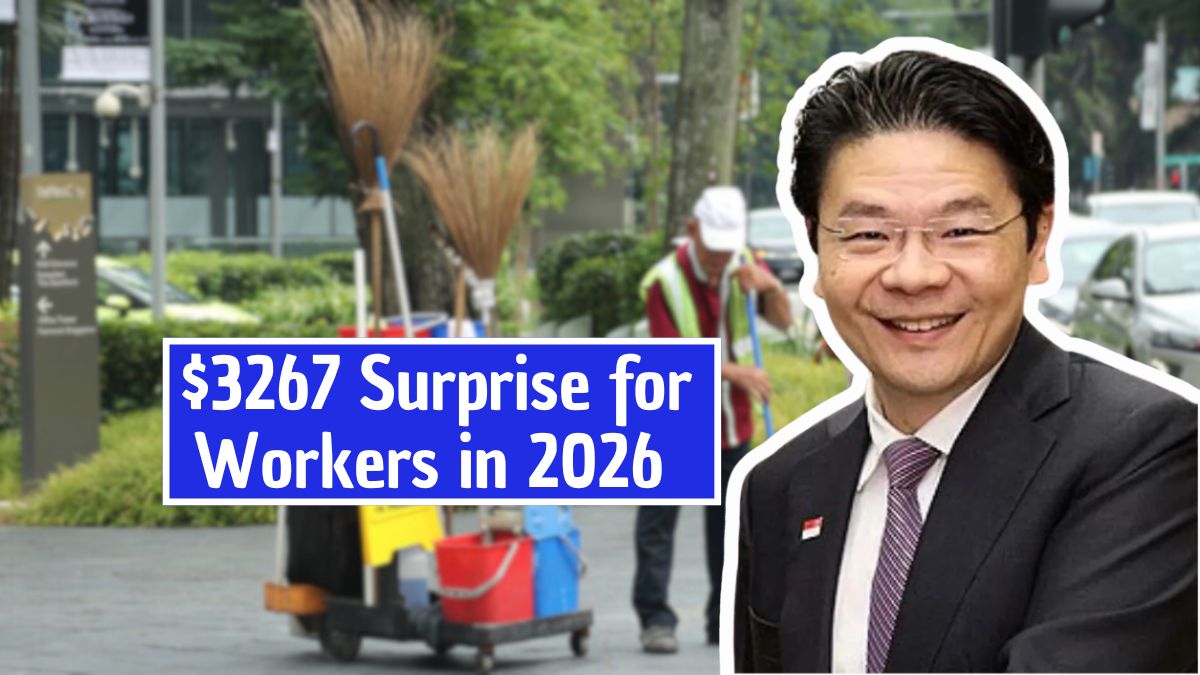
In 2026, the Singapore government will provide a maximum annual payout of S$3,267 to low-income workers and self-employed individuals. This significant move falls under the enhanced Workfare Income Supplement (WIS) scheme, designed to boost net incomes while promoting retirement savings and financial security.


This combined benefit—part direct cash, part Central Provident Fund (CPF) credit—delivers immediate relief and long-term stability, especially critical for lower-wage Singaporeans facing rising living costs.
Understanding the Enhanced Workfare Income Supplement
The revamped WIS payout structure is a cornerstone of Singapore’s social safety net. It incorporates two key components that serve different but equally vital purposes for the working class.


- Cash Payments: Disbursed directly to workers to help manage daily expenses such as food, transport, and utilities.
- CPF Contributions: Allocated to CPF accounts to help build up savings for healthcare, retirement, and housing needs.
This dual approach strengthens the social safety net while also encouraging continued participation in the workforce. For many, this is not just a benefit—it’s a lifeline in times of economic strain. By addressing both immediate cash flow issues and long-term financial health, the government ensures that workers are supported holistically.
The Purpose Behind the New $3,267 Workfare Allocation
The government has made it clear that the 2026 enhancement to WIS is more than a financial decision—it’s a moral and social commitment. As the cost of living rises, ensuring that the lowest-paid workers see a real increase in their take-home pay is a priority.
The payout aims to:
- Acknowledge the contributions of low-wage workers to Singapore’s economic machinery.
- Offer relief against inflation and living expenses.
- Incentivize continued employment, even in lower-paying sectors.
- Ensure that retirement savings aren’t compromised due to low monthly incomes.
This targeted support reflects the state’s progressive approach to income redistribution. It acknowledges that while the economy grows, the benefits must be shared, ensuring that the floor for basic standards of living is maintained and raised.
Eligibility Rules: Who Qualifies for the 2026 WIS Payout?
Not every worker qualifies automatically for the $3,267 payout. Instead, eligibility is based on a combination of income, age, and employment status. The Ministry of Manpower (MOM) has strict criteria to ensure the funds reach those who need them most.
Key qualifying criteria include:
- Monthly income ≤ S$3,000 for employees. This threshold covers a significant portion of the workforce.
- Self-employed persons must declare incomes within the government’s defined threshold. They must also make mandatory Medisave contributions to qualify.
- Eligible age groups include lower-income adults (generally aged 35 and above), seniors (aged 60 and above), and persons with disabilities who are working.
Workers must also meet citizenship, work duration, and CPF contribution requirements to receive the benefit. Specifically, you must be a Singapore Citizen or Permanent Resident usually residing in Singapore. For employees, you must have worked for at least one month in the qualifying period.
Key Features of the S$3,267 Payout (Full Table)
| Particulars | Details |
|---|---|
| Payout Amount | Up to S$3,267 per year (maximum tier for seniors) |
| Scheme | Workfare Income Supplement (WIS) |
| Eligible Income | ≤ S$3,000/month for employees |
| Self-Employed Threshold | Based on declared annual net income |
| Components | Cash + CPF/MediSave contributions (40% cash, 60% CPF) |
| Distribution Period | Scheduled payouts throughout 2026 |
The payments are not one-off lumpsums, but are released quarterly or periodically throughout the year, ensuring regular support and better financial planning for recipients.
WIS Cash Component: Helping with Everyday Needs
For most eligible individuals, the cash component of the payout is immediately helpful. While the CPF portion secures the future, the cash portion addresses the present.
- Pay for transport, food, utilities, and other essentials.
- Reduce dependence on high-interest loans or credit facilities.
- Relieve pressure on monthly budgeting, especially for families with children.
For many, even a few hundred dollars every few months goes a long way in bridging the gap between a tight paycheck and rising daily costs. This liquidity is vital for maintaining dignity and standard of living.
CPF Boost: Retirement and Medical Security
The CPF contributions ensure that recipients don’t just survive the present, but also plan for a secure future. The MediSave top-ups are especially helpful for the self-employed, who often lack employer-sponsored medical benefits.
Key advantages include:
- Higher CPF retirement savings, which compound over time.
- Better access to subsidized healthcare through MediSave.
- A sense of financial dignity in older age, reducing reliance on family.
This structure aligns with the national philosophy of “workfare” rather than “welfare”—helping those who help themselves.
Impact on Seniors and Persons with Disabilities
Singapore’s progressive framework is clearly evident in how this payout is inclusive. Seniors and people with disabilities who are still contributing to the economy through part-time or freelance work are:
- Recognized for their efforts and continued economic participation.
- Rewarded with higher support rates under WIS (the payout increases with age).
This not only reduces inequality but also encourages active ageing and independent living. It sends a strong signal that every contribution to the workforce, regardless of age or ability, is valued by the nation.
Income Redistribution and Social Equity
This S$3,267 payout is part of Singapore’s broader efforts to bridge income inequality. It directly supports:
- Lower-income earners in essential services (cleaning, security, food services).
- Gig workers, delivery riders, and freelancers.
- Individuals who typically fall through the gaps of traditional welfare systems.
The scheme plays a key role in narrowing the income gap, giving everyone a fairer shot at economic progress. By topping up the earnings of the lowest 20% of income earners, the government ensures that the fruits of economic growth are distributed more evenly.
Timeline and Distribution: When Will You Receive It?
The Workfare payouts will be distributed in phases throughout 2026, typically based on:
- CPF contribution months (for employed individuals).
- Annual income declarations (for self-employed persons, usually processed after tax filing).
Workers will be notified via Singpass or mail when their payouts are processed. In most cases:
- Cash is transferred via GIRO or PayNow NRIC.
- CPF contributions go directly to recipients’ Ordinary, Special, and MediSave accounts.
It is crucial for workers to ensure their bank account details and contact information are updated with the government to avoid delays in receiving their funds.
The Broader Strategy: Beyond a Single Payment
This S$3,267 payout isn’t just a one-time initiative—it’s a symbol of a larger commitment to:
- Reward work over passive support.
- Create long-term financial security for those earning less.
- Strengthen social cohesion across income classes.
Singapore’s economic model has always relied on forward-thinking welfare support, and the 2026 WIS update is a clear continuation of that strategy. It is designed to be sustainable and scalable, adapting to the changing economic landscape.
Political Context: 8th CPC Debate and Social Spending
The 8th Central Pay Commission (CPC), although primarily relevant to civil servants, has come under fire in some circles for limited inclusivity. In contrast, the WIS expansion stands out as a more targeted, efficient approach that supports non-public sector workers.
This contrast in models sparks debate about the best way to support working citizens—through broad salary revisions or focused income supplements. The WIS model is favored for its precision and ability to channel funds directly to those who need them without bureaucratic bloat.
Government’s Stance: A Progressive and Inclusive Vision
Singapore’s government continues to stress that economic growth must be inclusive. The WIS payout represents this philosophy in action.
By rewarding work, supporting savings, and helping those most in need, the state reinforces:
- Social mobility
- Economic stability
- Workforce resilience
This ensures that no one is left behind, even in a fast-moving, high-cost society. The 2026 enhancements prove that the government is willing to invest significantly in its people to maintain social harmony and economic vibrancy.
How much is the maximum WIS payout in 2026?
What is the income limit to qualify for WIS?
Is the WIS payout given as cash?
Who is eligible for the 2026 Workfare payout?
When will the 2026 WIS payments be made?
