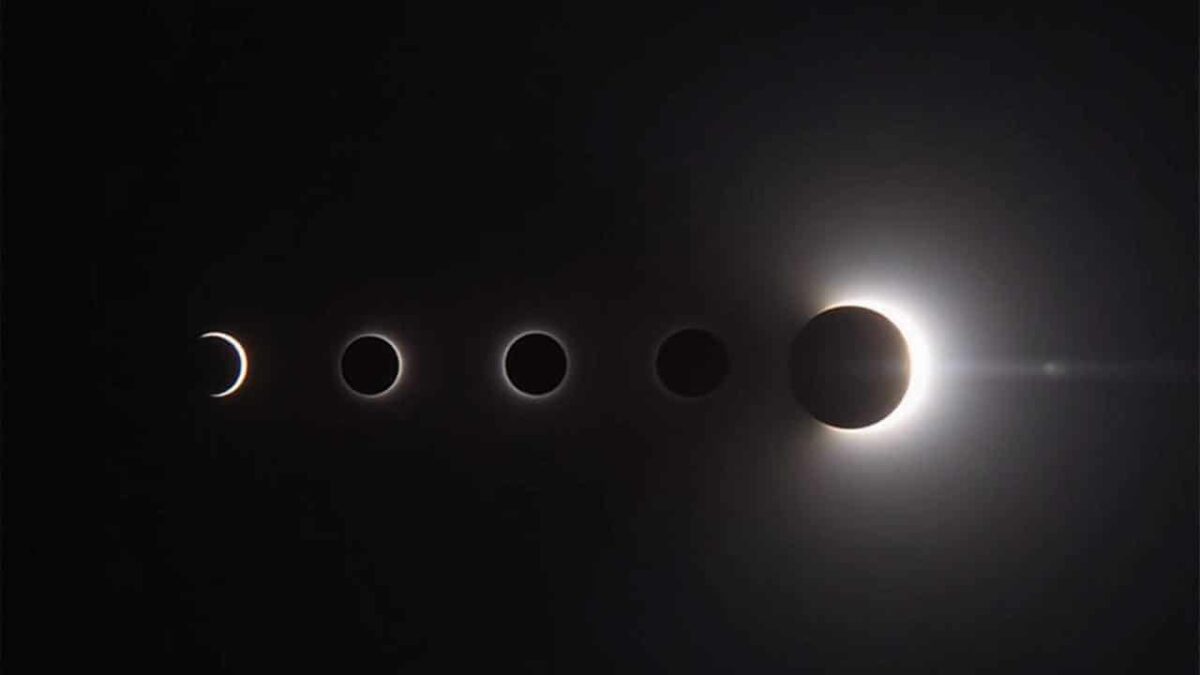
The light on the kitchen table shifted from bright gold to a flat, uneasy grey. Birds went silent mid‑song. Somewhere down the street, a sensor light clicked on, confused. Within minutes, day looked like late twilight, and people stepped outside with half‑buttoned shirts and phones held high, whispering without really knowing why they were whispering. A car alarm started, then stopped, as if embarrassed. Shadows, those trusted companions of everyday life, vanished. Above them, the Sun was being erased in slow motion. Astronomers had warned it would be the longest solar eclipse of modern times. They hadn’t quite captured the way it would feel in the pit of your stomach. Something in the air said: this isn’t just another eclipse.


When the Sun goes missing for an eternity-long minute
For astronomers, the headline is simple: we’re about to witness the longest total solar eclipse of the modern era, with darkness stretching on for more than seven full minutes in some locations. For everyone else, it will feel like time has been pushed out of joint. Long enough to notice the change, to fumble with cameras, to look up twice, to feel the hairs lift on your arms. Not just a flicker of night, a real pause in daylight. That’s rare. Rarer than many people realise. It’s the kind of event future you will brag about years from now at dinner tables and in late-night conversations.
On a narrow path carved across Earth’s surface, cities and small towns are preparing for crowds they’ve never seen before. Hotels are booked months out, farmers fielding desperate emails from people begging to pitch tents among their crops. In one coastal village along the path of totality, the population is expected to triple overnight, driven by eclipse chasers flying in from five continents. Local schools are rehearsing “eclipse drills” with kids, handing out cardboard viewers like party favours. There’s a quiet race in every family: who will get the best photo, the clearest view, the boldest story to tell later. The sky becomes a destination.


What makes this eclipse different is not just its path, but its sheer duration. Most total solar eclipses last a couple of minutes. This one stretches close to the theoretical limit set by the cosmic geometry of Earth, Moon and Sun. The Moon will be near its closest point to Earth, appearing slightly larger in the sky, while Earth itself is relatively far from the Sun, making the Sun’s disk a hair smaller. That perfect coincidence lets the Moon’s shadow linger. For astronomers, it’s a once-in-a-lifetime lab: more time to study the Sun’s faint outer atmosphere, more time for instruments to collect data without interruption, more time to stare into that eerie darkness at noon and ask quietly what on Earth we’re all doing here.
How to actually live this eclipse, not just film it
The best way to experience the longest eclipse of our age starts weeks before the Moon even moves. Pick your spot along the path of totality, then strip your plan down to the essentials: safe viewing glasses, a comfortable place to sit, and a way to keep track of the phases without obsessing. Arrive early enough to breathe in the normal daylight first. Let your eyes learn the ordinary before the sky rewrites it. When the partial phase begins, glance up every few minutes, not every ten seconds. Let the moment unfurl, rather than chasing it frame by frame.
On the day itself, give yourself permission to miss the perfect shot. This is a spectacle designed for your nervous system, not your social media feed. Talk with the people around you before totality hits. Ask where they came from, why they travelled so far just to watch the Sun vanish. On a field in Oregon during a past eclipse, a man who had flown in from Tokyo burst into tears at totality and laughed at himself a minute later. That small, human crack in composure is where this kind of event leaves its mark. You’ll remember the goosebumps and the sudden chill long after you’ve forgotten the megapixels.
Most people make the same mistakes: they drive too late, they park badly, they spend the crucial minutes fiddling with tangled tripods and half-charged phones. They forget snacks, water, a light jacket for that temperature drop that always feels more dramatic than the numbers suggest. Soyons honnêtes : personne ne fait vraiment ça tous les jours. So be gentle with yourself. If the clouds roll in at the last moment, it will hurt, yes. Still, even under a hazy sky, the world will darken, the animals will hesitate, and you’ll feel that odd, shared pause that only comes when a whole region looks up together and realises how small it is.
“The longest eclipses are like slow-motion miracles,” says Dr. Lena Morales, an astronomer who has chased eleven total eclipses across nine countries. “You have time not just to gasp, but to think. To notice the stars, to look around at the faces beside you, to realise you’re standing in the shadow of the Moon on a spinning rock in space.”
That’s the strange gift of these minutes: they stretch the elastic of our ordinary lives. While the corona blazes in a ghostly halo, you might find yourself doing nothing more dramatic than holding someone’s hand a little tighter. Or standing silent in a crowd that has, for once, put its arguments on pause.
- Use certified eclipse glasses for all partial phases.
- Plan your route and parking before dawn.
- Keep one device for photos, one moment entirely screen‑free.
- Notice the temperature drop, the wind shift, the animal behaviour.
- After totality, write down three things you felt, not just what you saw.
The long shadow that stays in your mind
When daylight finally returns, it feels slightly off, like the world has been unplugged and reconnected in a hurry. Colours seem louder. People clear their throats, make small jokes, shuffle their feet as if embarrassed by how moved they were five minutes ago. Cars start up, planes cross the sky, notifications buzz again. Yet a thin line has been drawn across your memory now, the before and after of this extended artificial night. You might find yourself replaying the moment the Sun’s last bead of light snapped out, or the gasp from the kid standing nearby, more than you replay the videos you captured.
The longest solar eclipse of modern history isn’t just a feat of orbital mechanics; it’s an unplanned group therapy session disguised as an astronomical event. On a planet arguing with itself about almost everything, here is a rare appointment shared by millions, with no one in charge and no ticket price set by a streaming platform. For scientists, those extra minutes of darkness will mean new papers, new datasets, new clues about the Sun’s restless outer layers. For everyone else, it might mean a story that surfaces unexpectedly years later, on a sleepless night or during a power cut, when the room goes dark and your mind jumps back, uninvited, to the day the sky shut off on purpose.
How long will this “longest” eclipse actually last?
Is it safe to look at the eclipse with the naked eye?
Where on Earth will the longest totality be visible?
Will the sky become completely dark like midnight?
What if it’s cloudy on the day of the eclipse?
