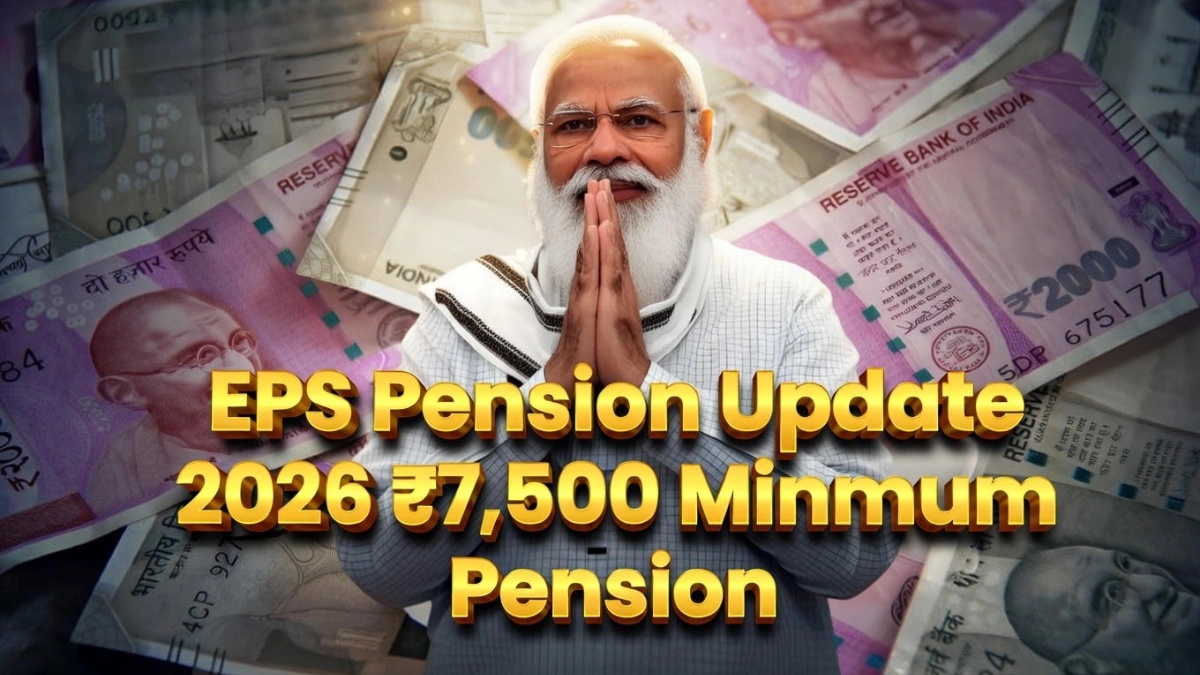
The EPS Pension Update 2026 introduces a proposed ₹7,500 minimum monthly pension, aiming to strengthen financial security for retirees. With rising living and healthcare costs, the update focuses on ensuring a more dependable income for pensioners who rely primarily on EPS benefits. This change is expected to improve post-retirement stability for millions of former employees.


Retirement is a significant milestone that brings a shift from a steady income to relying on savings and pension funds. For millions of employees in India, the Employees’ Pension Scheme (EPS) serves as a vital safety net. However, for a long time, the existing pension amounts have been a topic of debate, often cited as insufficient to meet the basic needs of senior citizens. The proposed update for 2026 is a breath of fresh air, signaling a shift towards a more humane and adequate support system for the elderly population.
Why the Minimum Pension Increase Matters


For many retirees, low pension payouts have struggled to keep pace with inflation. Setting a minimum pension floor addresses this gap by offering a predictable baseline income. The ₹7,500 threshold is designed to help pensioners manage essentials such as food, utilities, and medical needs with greater confidence and dignity.
Inflation erodes the purchasing power of fixed incomes. Over the last decade, the cost of living has surged, making it difficult for pensioners to maintain their standard of living without financial support from family members. The proposed increase is not just a numerical adjustment; it is a critical intervention to prevent senior citizens from falling into poverty. By ensuring a higher minimum pension, the government aims to restore the financial independence of retirees, allowing them to live with self-respect.
Addressing the Inflation Gap
Healthcare costs, in particular, have seen a steep rise. Senior citizens are more susceptible to medical emergencies, and without adequate financial backing, these unforeseen expenses can be devastating. A higher pension floor ensures that retirees have a buffer to handle such situations without depleting their life savings.
Enhancing Social Security
Social security is a fundamental right. When the workforce retires, the responsibility shifts to the state and the pension system to provide care. This update aligns with global standards where pension amounts are periodically revised to reflect economic realities and social obligations.
Who Stands to Benefit from the Update
The EPS minimum pension update primarily benefits retirees with shorter service periods or lower pensionable salaries who previously received modest payouts. Existing pensioners as well as future retirees under the Employees’ Pension Scheme are expected to see improved income support, subject to eligibility and final implementation guidelines.
Let’s break down the specific groups who will find this update life-changing:
- Long-term low-wage earners: Employees who worked for decades but had lower contribution ceilings often received meager pensions. This group will see the most significant percentage increase in their monthly income.
- Widows and dependents: Many widows rely solely on the EPS family pension. An increase in the minimum threshold directly improves their monthly survival prospects.
- Retirees with broken service periods: Individuals who may have had gaps in their employment history often end up with lower calculated pensions. The floor amount ensures they are not penalized too severely.
It is important to note that while the proposal targets these vulnerable groups, the ripple effect benefits the entire ecosystem. When senior citizens have money to spend, it boosts local economies, particularly in tier-2 and tier-3 cities where they often reside.
How the EPS Pension Structure Works
Under EPS, pensions are calculated based on pensionable salary and years of eligible service. While the standard formula remains in place, the introduction of a minimum pension ensures that qualifying retirees receive a baseline amount regardless of calculated outcomes. This approach combines formula-based fairness with income protection.
The standard formula for EPS pension is:
Pension = (Pensionable Salary × Pensionable Service) / 70
However, for many employees with a short service history or low average salary, this formula often resulted in amounts far below a living wage. The ₹7,500 minimum pension acts as a cap. If the calculated amount is lower than ₹7,500, the pensioner will receive the minimum guaranteed amount. If the calculated amount is higher, they continue to receive the higher sum. Essentially, it acts as a safety net, not a ceiling.
Understanding Pensionable Salary
Pensionable salary is the average monthly salary drawn during the last 60 months of service. A higher pensionable salary naturally leads to a higher pension. However, for employees in the unorganized sector or those with low wages throughout their career, this rarely crosses the threshold required for a decent pension. The new update corrects this structural flaw.
Importance of Pensionable Service
Pensionable service refers to the number of years an employee has contributed to the EPS fund. A minimum of 10 years of service is required to be eligible for a pension. The longer the service, the higher the pension. With the new update, even those with just the minimum 10 years of service are assured a respectable amount.
EPS Pension Update 2026 Overview
Here is a summary of the key details regarding the proposed pension update:
| Component | Details |
|---|---|
| Scheme | Employees’ Pension Scheme |
| Proposed Minimum Pension | ₹7,500 per month |
| Beneficiaries | Eligible EPS retirees |
| Objective | Improved income security |
| Applicable Year | 2026 |
This table summarizes the key elements of the EPS pension update in a simple format. The clarity of these figures helps pensioners plan their finances better. Knowing that there is a guaranteed amount coming in every month reduces anxiety and allows for better budgeting of household expenses.
Impact on Retiree Income and Stability
The proposed minimum pension is expected to significantly improve monthly cash flow for lower-income retirees. With a more reliable income floor, pensioners can better plan expenses and reduce dependence on family support. Over time, this change may contribute to improved quality of life and reduced financial stress among retirees.
Psychological well-being is as important as physical health. Financial stress is a leading cause of anxiety and depression among the elderly. By ensuring that the EPS Pension Update 2026 provides a dignified minimum income, the government is also investing in the mental health of its senior citizens.
Reducing Dependency
In many Indian households, retired parents often feel like a burden on their earning children. This dynamic creates tension within families. A sufficient pension allows seniors to contribute to household expenses or at least manage their personal needs independently. This shift can significantly improve family relationships and the self-esteem of the elderly.
Long-term Economic Impact
Economists argue that putting money in the hands of those who have a high propensity to consume (like pensioners) boosts demand. This increased demand for goods and services—ranging from groceries to healthcare—can stimulate economic growth. Therefore, this pension hike is not just a welfare measure; it is also an economic stimulus.
Implementation and What Pensioners Should Do
Pensioners are advised to keep their records updated and monitor official notifications regarding implementation timelines. In most cases, eligible beneficiaries may receive revised payments automatically, while some may need verification or documentation updates to ensure accurate disbursement.
Here is a checklist for pensioners to ensure a smooth transition:
- Check KYC Status: Ensure that your Know Your Customer (KYC) details are up to date with the EPFO. This includes Aadhaar linkage, bank account details, and mobile numbers.
- Verify Service History: Log in to the UMANG app or the EPFO portal to verify that your date of joining and date of exit are correctly recorded.
- Bank Account Details: Ensure your bank account is active and linked to your Aadhaar to avoid any delays in Direct Benefit Transfer (DBT).
- Life Certificate: Submit the Jeevan Pramaan Patra (Life Certificate) annually to continue receiving your pension without interruption.
Since the implementation of such a large-scale change involves logistical challenges, it is likely to be done in phases. Pensioners should look out for circulars from the Central Provident Fund Commissioner (CPFC) regarding the exact date from which the revised rates will be applicable.
Online Portals and Helplines
The EPFO has been digitizing its services. Pensioners can use the UMANG app (Unified Mobile Application for New-age Governance) to track their pension status, download pension slips, and raise grievances. The EPFiGMS (EPFO Grievance Management System) is also available for filing complaints if there are discrepancies in the pension amount.
Conclusion
The EPS Pension Update 2026, with a proposed ₹7,500 minimum pension, represents a meaningful step toward enhancing retiree income security. By strengthening the pension floor, the update aims to protect vulnerable pensioners from rising costs and provide a more dignified retirement. Staying informed through official channels will help beneficiaries understand eligibility and payment timelines.
This update is a testament to the evolving social contract between the state and its citizens. It acknowledges that a nation’s progress is incomplete if its elderly population is left behind in financial distress. As we look forward to the official rollout, the hope is that this move will set a precedent for future revisions, ensuring that the pension system remains dynamic, responsive, and compassionate.
For pensioners and their families, the message is clear: the future is looking slightly brighter, and financial relief is on the horizon.
What is the proposed minimum pension amount under the EPS Update 2026?
Who is eligible for the ₹7,500 minimum pension?
When will the new pension rates come into effect?
Do I need to apply to receive the revised pension?
Does this update affect the calculation formula for EPS?
