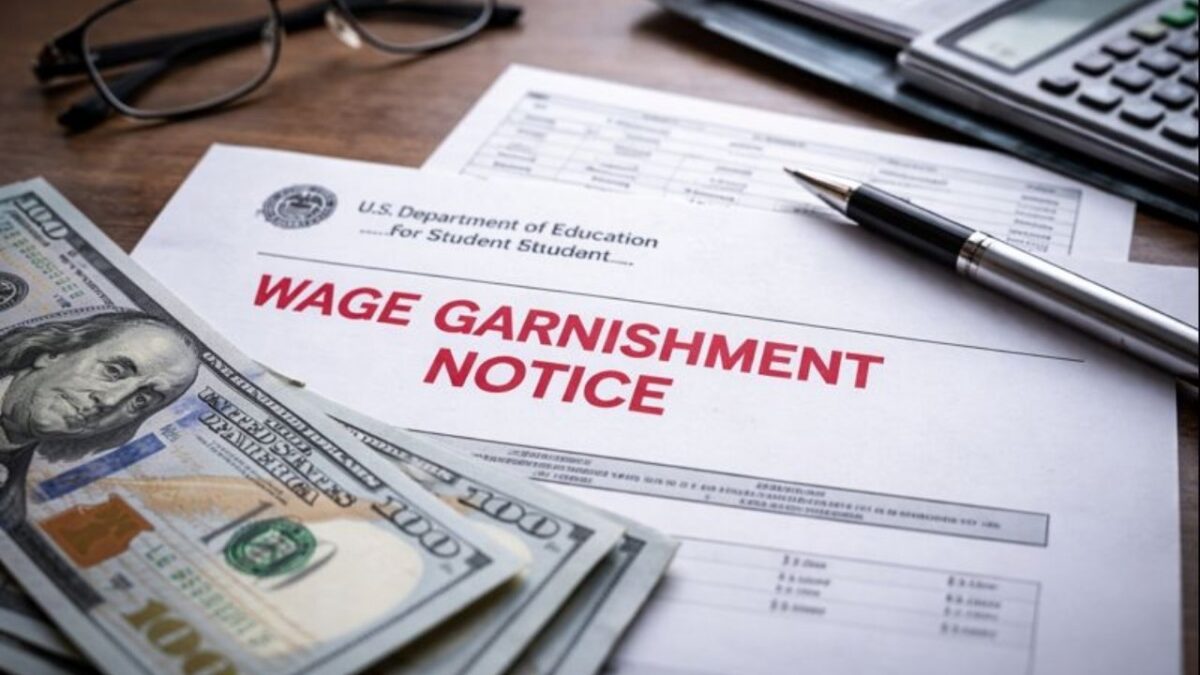
The U.S. Department of Education has restarted administrative wage garnishment for borrowers who are in default on federal student loans, with notices beginning in early January 2026. The move follows the end of pandemic-era collection pauses and the phased restart of federal debt collections, which began in 2025. This policy shift marks a significant return to pre-pandemic enforcement norms, signaling that borrowers who have been delinquent on their federal student loan obligations may soon see deductions from their paychecks if they do not take proactive steps to address their default status.


Officials say wage garnishment applies only to loans already in default and is being rolled out gradually, starting with a limited number of notices and expanding in the coming months. Borrowers must receive written notice and have a defined period to respond before any wages are withheld. The resumption of these collection efforts is designed to recoup funds owed to the federal government while providing borrowers with a structured path to resolve their debts without facing severe financial hardship. For many borrowers, understanding the timeline and their specific rights is the first step in avoiding or mitigating the impact of garnishment.
What changed in January 2026
Administrative wage garnishment, often called AWG, allows the federal government to require employers to withhold part of a worker’s pay to collect defaulted federal student loan debt. This authority has existed for decades, but its use was paused during the COVID-19 emergency. The Department of Education confirmed that AWG notices resumed in early January 2026 as part of its broader return to normal collections. This specific resumption date was chosen to align with the end of various extended forbearance periods that had been in place for millions of borrowers.


The restart follows the reactivation of other federal collection tools in 2025, including Treasury offsets that can intercept tax refunds. Wage garnishment is considered a more direct tool because it affects ongoing paychecks rather than annual refunds. Unlike Treasury offsets, which are often a one-time event, wage garnishment creates a recurring reduction in take-home pay, which can significantly impact a borrower’s monthly budget. Consequently, the Department has emphasized that this measure is a last resort, intended for those who have not responded to other attempts at contact or resolution.
Who may be affected
Wage garnishment only applies to borrowers whose federal student loans are in default. For most federal student loans, default occurs after about 270 days without a required payment. AWG actions exclude borrowers who are current on their loans, enrolled in repayment plans, or in approved deferment or forbearance. It is important to note that the definition of “default” can vary slightly depending on the specific type of federal loan (e.g., FFEL Program loans vs. Direct Loans), but the 270-day benchmark is the standard rule of thumb for most borrowers.
National estimates indicate that several million borrowers remain in default. Department statements and media reporting indicate that the first wave of AWG notices involved roughly 1,000 borrowers, with additional notices expected to be sent on a rolling basis throughout 2026. While the initial rollout may seem small, the Department has the infrastructure to scale these notices rapidly. Borrowers who have changed addresses or phone numbers without updating their information with their loan servicer are particularly at risk of missing critical communications.
Facts about the 2026 wage garnishment restart
To provide a clear overview of the current situation, the Department has released specific parameters regarding how these garnishments will be handled. Understanding these facts can help borrowers determine if they are likely to be impacted and how to prepare a response.
| Item | Details |
|---|---|
| Program | Administrative wage garnishment for defaulted federal student loans |
| Start date | Early January 2026 |
| Who is targeted | Borrowers are in default, generally 270+ days past due. |
| Maximum withholding | Up to 15 percent of disposable pay |
| Notice requirement | Written notice with time to respond before withholding |
How wage garnishment works
Under federal rules, the government can garnish up to 15 percent of a borrower’s disposable income, which is the amount left after legally required deductions such as federal, state, and local taxes. The exact amount withheld depends on income level and whether other garnishments are already in place. It is vital to understand that this 15% is calculated based on the borrower’s “disposable pay,” not their gross pay. This distinction means that the actual dollar amount taken from a paycheck will be lower than 15% of the total earnings.
Before garnishment begins, the Department of Education must send a written notice to the borrower’s last known address. This notice explains the debt, the proposed withholding amount, and the borrower’s rights. Borrowers typically have about 30 days to respond, request a review, or enter into an approved repayment solution. This 30-day window is critical. If a borrower receives a notice and ignores it, the garnishment will almost certainly proceed. However, if the borrower acts within this window, they can often stop the garnishment by agreeing to a repayment plan.
If the borrower does not respond within the notice period, the Department may instruct the employer to begin withholding wages. Employers are legally required to comply once they receive a valid garnishment order. This requirement places a burden on employers to act quickly, but it also ensures that the government can efficiently recover funds. For the employee, the first indication of garnishment is often a reduced paycheck, which can lead to financial confusion if they were not aware of the order.
Borrower rights and response window
Borrowers have specific rights once a garnishment notice is issued. These rights are designed to ensure due process and to allow borrowers to correct errors or resolve defaults without wage withholding if they act quickly. The Department of Education is legally mandated to adhere to these procedures, and borrowers should be aware that they are not powerless in this situation.
Borrower rights include:
- The right to receive written advance notice before garnishment begins
- The right to inspect and copy records related to the debt
- The right to request an administrative hearing to dispute the debt or the amount
- The right to avoid garnishment by entering an approved repayment option in time
Failing to respond within the notice period significantly reduces the ability to stop garnishment before it starts, although some remedies remain available even after withholding begins. For instance, if a borrower realizes their wages are being garnished without prior notice (perhaps due to moving), they can still contact the Department to rehabilitate the loan, which will eventually stop the garnishment, though they may lose a portion of their pay in the interim.
Options to stop or avoid garnishment
The Department of Education outlines several established ways borrowers can prevent or end wage garnishment by resolving their loan defaults. These options focus on restoring loans to good standing rather than imposing long-term penalties. The goal of these programs is to transition borrowers from a state of default back into a manageable repayment status.
Common remedies include:
- Loan rehabilitation through a series of agreed monthly payments
- Loan consolidation into a new Direct Consolidation Loan
- Enrollment in an income-driven repayment plan
- Paying the loan balance in full or making an agreed lump-sum payment
Each option has different timelines and consequences. Rehabilitation typically takes several months and removes the default status upon completion. Consolidation can be faster in some cases, but may not erase all credit history related to default. Borrowers must weigh the pros and cons of each; for example, rehabilitation is generally a one-time option per loan, while consolidation can be done multiple times but may result in higher total interest costs over the life of the loan.
Comparison of main remedies for defaulted loans
When facing the prospect of wage garnishment, it is helpful to compare the available remedies side-by-side. Each pathway offers a different route to financial recovery and has distinct implications for the borrower’s credit and future loan terms.
| Option | Purpose | Typical outcome |
|---|---|---|
| Rehabilitation | Gradually cure default | Default removed after required on-time payments |
| Consolidation | Replace defaulted loans with a new loan | Garnishment can stop once consolidation is complete |
| Income-driven repayment | Align payments with income | Payments may be reduced significantly |
| Full payment | Settle debt immediately | Default resolved once paid |
Impact on employers and payroll
When a garnishment order is issued, employers must begin withholding the specified amount from the borrower’s wages and send it to the federal government. Failure to comply can expose employers to penalties. However, employers are not responsible for determining eligibility or calculating disputes; they act only after receiving official instructions. This distinction is important because it means the employer’s role is strictly administrative.
For workers, garnishment reduces take-home pay and can affect household budgeting. Because of this, federal guidance encourages borrowers to act during the notice period to explore alternatives before payroll deductions begin. Once an employer receives a garnishment order, they are generally required to implement it within a specific timeframe, usually the next pay period. This rapid turnaround emphasizes the need for borrowers to act immediately upon receiving a notice.
Where borrowers can check their status
Borrowers can verify loan status, default history, and repayment options through StudentAid.gov, the federal government’s official student aid website. The site provides access to account details, servicer information, and online applications for consolidation, rehabilitation, and income-driven repayment plans. It is recommended that borrowers log in to this portal regularly to ensure their contact information is up to date and to review the current status of their loans.
The Department also operates a Default Resolution Group that handles cases involving default and garnishment. Garnishment notices include contact information and are published on official federal websites. Borrowers should be wary of third-party organizations claiming to offer debt relief for a fee; the Department advises that borrowers can handle these matters directly and for free through official government channels.
What to expect next?
The Department of Education has indicated that wage garnishment notices will continue to roll out gradually throughout 2026. Borrowers who have not updated their contact information may still be reached through employer records once garnishment orders are issued, making early action important. This method of contact ensures that even if a borrower has moved, the government can still locate them through payroll records.
As federal collections return to pre-pandemic norms, officials continue to emphasize that wage garnishment is a last-resort tool. Borrowers who engage with the system and choose an approved resolution pathway generally can avoid or limit its impact. Looking ahead, the Department is likely to expand its outreach efforts to ensure borrowers are aware of their options, potentially partnering with community organizations and higher education institutions to spread awareness.
Can the government garnish my wages without notice?
How much of my paycheck can be garnished?
What is the fastest way to stop garnishment?
Does wage garnishment affect my credit?
Where can I check my loan status?
