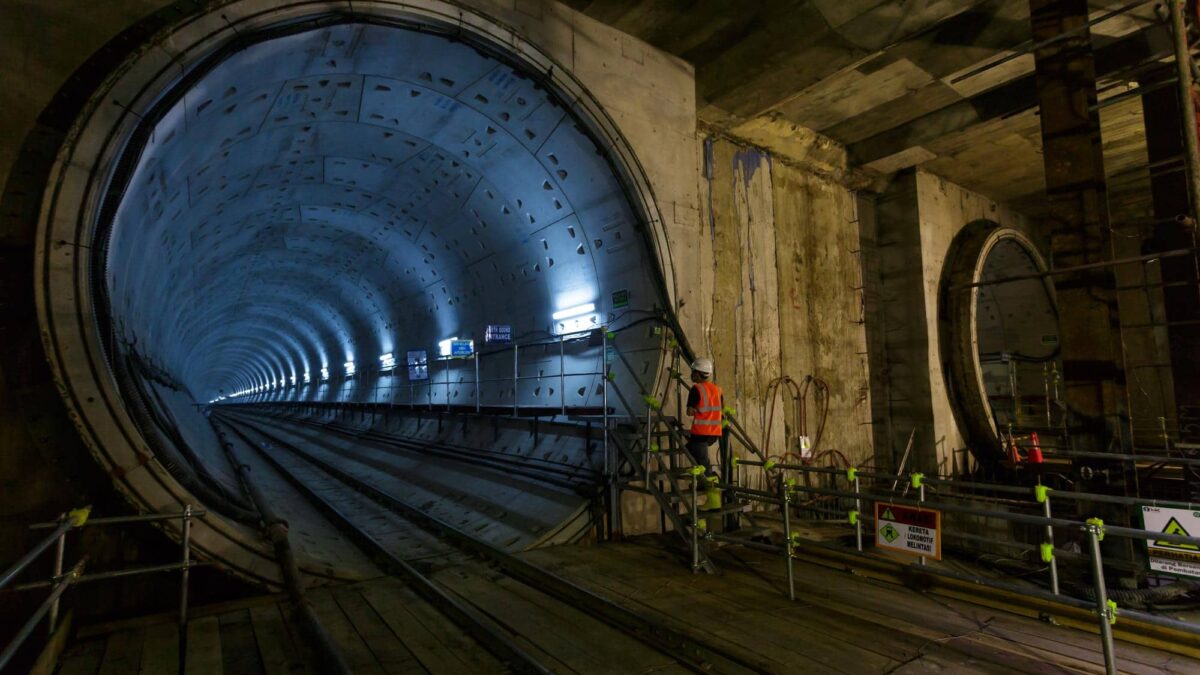
A yellow-white light pulses under black water in the middle of the Atlantic. On a ship that barely appears on public maps, a crane lowers a steel cylinder the size of a house into the waves. The sea is calm on the surface, but 4,000 meters below, machines are carving a path through rock no human eye will ever see. Aboard, an engineer from Hamburg scrolls through a 3D model on her tablet, zooming in on a glowing blue line that stretches from one continent to another. On another screen, live sensors show pressure, vibration, and micro-movements of the seabed. Nobody raises their voice. Nobody films TikToks. They just watch the numbers and the cable disappearing into the black. They’re building a railway where no one can look out the window.


The day continents started getting closer for real
Most of us grew up with maps that felt stable: oceans here, continents there, flights connecting the dots in slow arcs across the sky. Suddenly, a group of mega project engineers is quietly rewriting that picture with an idea that sounds like science fiction: an underwater rail line threading through a deep-sea tunnel, built to link entire continents in a straight, steel nerve. They talk about it as calmly as if they were extending a metro line. In reality, we’re looking at the largest continuous tunnel project ever attempted under the ocean floor. Imagine boarding a train in Europe and stepping out in North America without ever seeing a runway. The premise is outrageous, yet on that night ship, welders and robot operators are already behaving as if this future is simply… under construction.


For a sense of scale, picture the Channel Tunnel between the UK and France. It’s about 50 kilometers long and took six years to bore, with “only” 75 meters of water overhead. Now multiply that scale several times, shift it to abyssal depths where pressure crushes submarines, and replace chalk with hard oceanic crust and unpredictable tectonic seams. The new tunnel system, built in segments and anchored into the seabed, stretches hundreds of kilometers between custom-built artificial islands and coastal portals. On site, you won’t see a neat hole in a cliff. You’ll see specialized tunnel boring machines assembled on modular platforms, then sunk to the sea floor in protective shells. Robotic arms seal segments together like a giant Lego set under extreme pressure. Every meter is scanned, modeled and compared to simulations run years ago. A single misalignment of a few centimeters in one section could compromise an entire route. That’s why construction is creeping forward in overlapping phases, like a vast mechanical ballet the public only sees as a vague press release.
Behind the epic visuals is cold logic. Long-haul aviation is strained, emissions are under scrutiny, and global trade keeps breaking its own records. A sealed, high-speed rail corridor under the ocean offers a controlled, weather-proof route. Trains can run on nearly carbon-free power if the grid feeding them is clean. Freight containers could roll from one continent to another with no port bottlenecks, no rerouting around political flashpoints, far fewer delays. Engineers frame it as resilience, not just spectacle. Diversifying how continents connect means less dependence on narrow canals or crowded skies. The tunnel won’t kill planes or ships, but it changes the game, giving governments and companies another artery when the usual routes choke. *The romantic idea of “shrinking the world” hides a very practical motive: making the system harder to break.*
How do you actually build a railway at the bottom of the sea?
Ask the engineers and they’ll start with one quiet word: segmentation. The underwater line isn’t one fairy-tale tube dropped into the abyss. It’s a chain of precisely engineered segments, pre-fabricated in coastal yards, then floated, sunk and locked into place along a surveyed trench on the seabed or inside a bored tunnel beneath it. Think of it as a necklace of reinforced rings, each one sealed, monitored and pressurized before the next joins it. On land, massive tunnel boring machines chew through rock from deep shafts on each coast, heading outwards. At sea, remote-operated vehicles prepare the route, clearing debris, installing foundations, checking for unstable slopes. Where geology allows, hard rock tunnels are bored under the seabed itself, leaving a thick shield of natural rock above. Where it’s too fractured, engineers switch to submerged floating tunnels or seabed-anchored tubes, pinned down by towers and tensioned cables like a submerged bridge.
The method is shockingly methodical, almost mundane when you zoom in. Segments are floated out in calm weather windows, guided by tugs and GPS triangulation, then filled with water to sink into exact alignment. Lasers and acoustic beacons help line up the joints to millimeter precision in murky depths. Once locked, giant gaskets and internal welds create a continuous pressure shell. It sounds clean on paper. Reality is messier. Each storm season can wreck carefully planned deployments. Supply chains for specialized steel and composites stretch across half the planet. Just transporting a single 200-meter tunnel section from the fabrication dock to its descent point is a logistical drama. Nobody does this every day, and the planning reflects that rarity.
The real nightmare would be millions of tons of water suddenly rushing in, so the entire project is obsessed with redundancy and failure modes. The rail corridor isn’t a single tube but a multi-cell structure: usually two main train bores, plus a smaller service and evacuation tunnel running parallel, connected by cross passages every few hundred meters. Every section has pressure sensors, leak detectors and automated fire systems designed to fight incidents without human heroics. Engineers divide risk into layers. First comes structural safety: can the tunnel itself handle quakes, landslides, and the slow “creep” of the seabed over decades? Then operational safety: power outages, braking failures, onboard fire. Finally, systems safety: hacking, sabotage, software glitches in signaling. With each risk, there’s a set of countermeasures, from flexible expansion joints that can absorb slight movements, to compartmentalized “watertight cells” that can be sealed off, to independent power and communications lines running in the service tunnel.
An undersea rail line also means rethinking maintenance. You can’t just “go outside” to check a crack. Inspecting the outer shell needs specially equipped submarines and inspection drones that can handle the pressure and darkness without feeding sharks with trailing cables. Some parts are designed with sacrificial outer layers that can degrade over time while leaving the main pressure shell untouched, buying decades of extra life with each upgrade cycle.
The human side of a machine that crosses oceans
If you ask the project managers for a practical method to keep something this vast under control, they’ll point to digital twins. Every kilometer of the tunnel has a virtual replica stitched together from construction data, sensor feeds and simulations. When a technician in Montreal tweaks a cooling system, the effect on humidity inside a section under the Atlantic shows up on their screen in seconds. The workflow is oddly intimate. Crews in distant control rooms “know” their section of tunnel the way you might know your own street. They recognize normal vibration signatures and seasonal patterns of micro-movements. When a reading drifts, they can compare it to thousands of hours of normal behavior. It’s not glamorous, but it’s how a rail artery that nobody sees stays alive and safe.
On the passenger side, designers push for something less clinical. Lighting is tuned to mimic circadian rhythms for travelers crossing time zones. Pressure is controlled to keep ears from popping. Windows don’t show the sea – there’s nothing to see there – but large curved screens can show journey data, art, even live feeds from surface buoys and coastal cities. On a good day, you might sip coffee at 500 km/h under several kilometers of water, watching sunrise in the departure city and live night footage at your destination. We’ve all had that moment when a delayed flight, endless queue and dry airport air make you swear you’ll “never fly again”. The promise here is different: a long-haul journey that feels more like a smooth intercity ride than a cramped airborne sprint. Will it always work like that? Of course not. There will be delays, system glitches, awkward first years. But the bar they’re aiming for is clear – less stress, less turbulence, fewer variables.
Behind the optimism sit a lot of fears nobody wants to pretend away. Claustrophobia. Terror of being trapped under the ocean. Distrust of the idea that “machines will handle it”. Engineers know this, and they talk about it quietly in canteens and late-night design calls. “You’re not just building a tunnel,” one senior systems engineer told me. “You’re building trust. The steel is the easy part. Convincing millions of people to ride it every day? That’s the real project.” To get there, a few pillars keep coming up when you listen to insiders:
* Radical transparency about safety data and incidents, not just polished press statements.
* Gradual ramp-up: freight first, then limited passenger runs, then full schedules.
* International oversight committees with real teeth, not ceremonial boards.
* Design that respects anxiety: generous emergency exits, clear signage, real drills.
* Ticket pricing that doesn’t turn the tunnel into a luxury toy for a global elite.
Projects of this size have a track record of forgetting the human factor once the ribbon is cut. The teams working under the sea say they want to do it differently. Whether their future bosses and politics will let them is another story.
A new kind of line in the sand – drawn under water
When you step back from the engineering porn, what’s really being built is a choice. A choice about how continents relate to each other in a century defined by climate stress, migration, and fragile supply chains. A choice about whether we keep relying on the same old bottlenecks – skies, canals, chokepoint straits – or experiment with buried arteries no satellite can easily blockade. The underwater rail line won’t erase borders. It might even highlight them, as immigration checks and customs scanners move from airports to deep terminals buried under coastal cities. Yet it also creates a weird new intimacy. A student in Lagos could, in time, ride connected high-speed routes to attend a conference in Madrid without ever boarding a plane. A crate of vaccines might leave a lab in Boston and roll straight into a hospital in Casablanca with nothing more exotic than wheel changes and software handovers along the way.
There’s something quietly radical in the idea that the empty, dark seabed – long treated as a dump, a frontier, a no-man’s-land – becomes the backbone for civilian travel and trade. Not a secret military cable, not an oil pipe, but a public corridor where anyone with a ticket can pass. The same environment we once fears as a drowning place turns into the solid ground, the “terrain” we trust to carry us. Will that feel empowering or unsettling? Probably both. It forces a conversation about who controls these invisible routes, who profits, and who carries the risk if something goes wrong. It asks whether the next wave of mega engineering will be driven mainly by the need to cut flight times for the already mobile, or by the gritty work of making basic connection more affordable and resilient for the rest of the world.
The first trains through this deep-sea tunnel won’t answer those questions. They’ll just move, quietly, beneath storms no passenger will ever see. The real test will be what we decide to layer on top of that movement – policies, prices, stories we tell our kids about what it means to cross an ocean without leaving the ground.
Is construction of the underwater rail line really underway?
How deep will the tunnel actually run beneath the ocean?
How long would a trip between continents take on this line?
Is it really safer than flying over the ocean?
When could ordinary passengers start using it?
